Pages

Monday, April 23, 2007

Happy Birthday Bill!


Today marks the 443rd birthday of William Shakespeare. He was born to John and Mary Shakespeare in Stratford-on-Avon in Warwickshire, England in the year 1564 (which is where he also died in 1616 on April 26th.)

In his lifetime he wrote some 154 Sonnets, 6 poems, 38 plays (broken down to 13 comedies, 10 histories, 10 tragedies, and 5 romances.)

For your reading and exploration pleasure I have discovered this great website Internet Shakespeare Editions by The University of Victoria, which is great for any kind of reseach, and this article “Shakespeare’s Coined Words Now Common Currency” by National Geographic. (Note: the article fails to mention that Shakespeare also coined the word “laughable”.)

Will Power!

Wednesday, April 04, 2007

Additional Information on Colette

Having completed my research project for my French class, I have added new biographical and literary details as well as recommended readings about the French author Colette to my post Happy Birthday Colette!. She is truly a fascinating character and I hope that you explore and appreciate her work like I have.

“You will do foolish things, but do them with enthusiasm.” - Colette

Thursday, March 22, 2007

William and Dorothy Wordsworth

I am not a huge fan of poetry; however, I do have my loves. Because of my previous post, A Poem for Spring, I thought I would share with you what I know of William Wordsworth.

William Wordsworth, the author of "I wandered lonely as a Cloud" (seen in the post A Poem for Spring) is a fascinating and wonderful poet. He is one of the English Romantics, the others being William Blake, Samuel Coleridge, Lord Byron, Percy Bysshe Shelley, and John Keats. The Romantics lived and write between the late 18th to early 19th century in England (roughly the same time America had their Transcendentalists).


Romanticism is defined as, "A term describing qualities that colored most elements of European and American intellectual life in the late 18th and early 19th centuries, from literature, art, and music, through architecture, landscape gardening, philosophy, and politics. With the social, political, and intellectual structures of society, the Romantics stressed the separateness of the person, celebrated individual perception and imagination, and embraced nature as a model for harmony in society and art. Their view was an egalitarian one, stressing the value of expressive abilities common to all, inborn rather than developed through training (Damrosch 1125.)

Wordsworth’s work have a simplicity to them, many of which incorporate nature into many of his work, that allows the reader to truly see the meaning of the poems. Another fascinating aspect of Wordsworth is the correlation between him and his sister Dorothy Wordsworth, who on her own is another captivating character in literature.

Dorothy never thought of herself as a true writer/poet and never truly wanted to publish her work, which she said for her family and friends as well for local records (her Grasmere Journals). With a few publications done by her brother along with his own work, her work was not truly published until the end of 19th century, decades after her death which was brought on by a combination of years of illnesses and a pre-senile dementia that is said to be similar to Alzheimer’s disease, and old age.

Dorothy lived and traveled with William for most of her adult life, which creates the parallel that is found in their works. This is wonderfully seen in Dorothy’s entry in one of her Grasmere Journals:

[A Field of Daffodils]

Thursday 15th. [April 1802] - When we were in the woods beyond Gowbarrow park we saw a few daffodils close to the water side, we fancied that the lake had floated the seeds ashore & that the little colony had so sprung up - But as we went along there were more & yet more & at last under the boughs of a country turnpike road. I never saw daffodils so beautiful they grew among the mossy stones about & about them, some rested their heads upon these stones as on a pillow for weariness & the rest tossed & reeled & danced & seemed as if they verily laughed with the wind that blew upon them over the Lake, they looked so gay ever glancing ever changing. This wind blew directly over the lake to them. There was her & there a little knot & a few stragglers a few yards higher up but the were so few as not to disturb the simplicity & unity & life of their one busy highway. we rested again & again. the Bays were stormy, & we heard the waves at different distances and in the middle of the water like the Sea (555.)

To see the similarities between Williams poem and Dorothy's journal entry is fantastic. Plus, there is a very interesting fact about this. William wrote "I wandered lonely as a Cloud" in 1804 (he did do a revision and republication in 1815), two years Dorothy's journal entry. It is believed that upon reading Dorothy's work William was inspired to write his poem. Unlike the few who do not believe this fact, I, personally, believe it and think it's incredible.

However, despite William being influence by Dorothy’s journal, there is a noticeable difference in the way both poets write. First, and probably most noticeable is the style of writing. Dorothy’s “A Field of Daffodils” is wonderfully detailed, as many personal journals are like. I personally love her descriptions of the flowers:


“I never saw daffodils so beautiful they grew among the mossy stones about & about them, some rested their heads upon these stones as a pillow for weariness & the rest tossed & reeled & danced & seemed as if they verily laughed with the wind that blew upon them over the Lake, they looked so gay ever glancing ever changing.”

I can truly see her imagery and hear a bright, clear laughter as if someone is in rapture.

In comparison, William has a more of poetic take on the same setting:


They stretched in never-ending line
Along the margin of a bay:
Ten thousand saw I at a glance
Tossing their heads in sprightly dance.
The waves beside them danced; but they
Outdid the sparkling waves in glee: - (l. 9-14)

As seen, while Dorothy is simply reported of the entire event with details, which are poetic in their own sense, William as made the event with a great poetic focus on nature (very Romantic).

Another interesting aspect of these sibling writers that I wanted to include in this novella-of-a-post is their involvement, with fellow writers and poets, in the abolition of British slavery and slave trade. William wrote several poems on the matter, such as "To Thomas Clarkson," which he wrote to his friend upon the bill of abolition being passed in the year 1807.

In my opinion these writers are simply wonderful.


Damrosch, David, and Kevin Dettmar, eds. The Longman Anthology: British Literature. 3rd ed. Vol. 2A. New York: Pearson Education, Inc, 2006. 1125.

Wordsworth, Dorothy. "A Field Of Daffodils." The Longman Anthology: British Literature. Ed. David Damrosch and Kevin J. H. Dettmar. New York: Pearson Education, Inc, 2006. 555.

Wednesday, March 21, 2007

A Poem for Spring

Since today is the first day of spring I thought that I would share one of my favorite poems. This one in particular reminds me of spring and the daffodils that grew in the yard of my home in Missouri. It must have been a beautiful sight to see a sea of daffodils as the one described in the poem.

I wandered lonely as a Cloud
by William Wordsworth

I wandered lonely as a Cloud
That floats on high o'er Vales and Hills,
When all at once I saw a crowd,
A host, of dancing Daffodils;
Along the Lake, beneath the trees,
Ten thousand dancing in the breeze.

Continuous as the stars that shine
And twinkle on the milky way,
They stretch in never-ending line
Along the margin of a bay:
Ten thousand saw I at a glance,
Tossing their heads in sprightly dance.

The waves beside them danced; but they
Outdid the sprarkling waves in glee: -
A Poet could not but be gay,
In such a laughing company:
I gaz'd - and gaz'd- but little thought
What wealth the show to me had brought:

For oft when on my couch I lie
In vacant or in pensive mood,
They flash upon the inward eye
Which is the bliss of solitude;
And then my heart with pleasure fills,
And dances with the Daffodils.

Wordsworth, William. "I Wandered lonely as a Cloud." The Longman Anthology: British Literature. Ed. David Damrosch and Kevin J. H. Dettmar. New York: Pearson Education, Inc, 2006. 526.

Tuesday, February 20, 2007

My Writings

As many of my friends know, during the school semesters I rarely have the time for my writings. My novels are put on the backburner, which limits me to sporadic moments of inspirations that are quickly jotted down on piece of paper that I have (my legendary spiral-bound, the margins of my school notes, a napkin, etc).

What is even rarer than these episodes is writing a piece of fiction for school purposes (except for the annual scholarship applications). However, it does happen once in a blue moon. Apparently, we had a blue moon this past week. For my 18th Century English literature class, my professor had assigned a piece of creative writing that corresponded with our readings of Gulliver’s Travels by Jonathan Swift. This assignment, and through the use of our imagination, required us to write two scenarios: 1. Being in a world of giants and 2. Being in a world of tiny people, which would make us truly think of what it must have been like for Gulliver discover the lands of Lilliput and Brobdingnag.

Since I did not want to make the assignment personal, I opted to write a short story entitled "L'Île - The Island"©. To save you all from a possible long summary, here is a one sentence abstract: “While exploring an unknown island, a group of sailors and their captain live through events of incredible proportions.” It was written in a journal entry style and is set during the 18th Century.

This was the first piece of fiction that I have completed in quite a long while. It is also the first piece of fiction that has been seen by other people as well as being the first one that includes a number French phrases and dialogue. The reviews so far have been great. A friend loves it, and my professor loved my correlations between my work and Swift’s novel. The narrator of the story is actually the main character of a short story- and novel-in-progress of mine. With such great results, I’m feeling confident in that my work will be successful.

Thursday, February 01, 2007

News in the World of Literature - Harry Potter

Less than two months after the announcement of the title, the book release date for Harry Potter and the Deathly Hallows was announced today! The final book in by J. K. Rowling’s series will hit the shelves and be in the hands of eager fans everywhere on July 21st of this year. Start the countdown!

Sunday, January 28, 2007

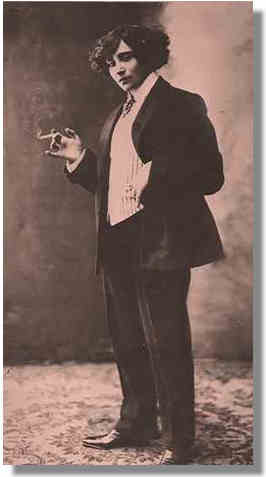
Happy Birthday Colette!

Today is the 134th birthday of the French novelist Colette.


Sidonie-Gabrielle Collete was born in 1873 in Burgundy, France to her parents Sido (Adèle Eugénie Sidonie Landoy) and Jules-Joseph Colette. In her lifetime, Colette was a “mime-drama” actress (performing such places like the Moulin Rouge), a journalist, and a beautician (this profession was financially unsuccessful because she was constantly signing and discussing her books with whoever came to the shop).

However, she is renown for her some 50 major works of fiction, which include the Claudine series, Chéri, its sequel La Fin de Chéri, Dialogues de bêtes, and Gigi.

Her work is known for the use of nature, a love she had developed in her childhood. Another one of her loves were her numerous pets who were the characters of Dialogues de bêtes. Perhaps the best-known work of hers to Americans is Gigi and it’s Oscar-winning musical adaptation by the same title. Colette wrote this up lifting novel during World War II, a time when literature tended to reflect the war in form or another. Gigi has no reference what so ever to the war. A third interesting fact about her work is that many of them are autobiographical in one way or another. This is seen in the Claudine series (despite how her first husband twisted the truth to make the plots risqué), Sido (which is about the relationship with her mother) and a common theme is love rebuked (which can reflect here unsuccessful first two marriages).


Because of her success Colette gained high honors in the world of literature. In 1945 she was first woman admitted to the Académie Goncourt, four years later she was elected president of the Académie Goncourt, and a year before her death, she became Grand Officier de la Légion d’honneur.
Her last honor was given to her upon her death. In 1954, she became the first woman in France to be given a state funeral. However, much like when she was alive, her funeral caused controversy. Because she had been divorced twice and did not receive the last sacrament, the Cardinal-Archbishop of Paris decided that the church would not be involved with the funeral. Thus, when visiting Colette’s tomb in the Père-Lachaise Cemetery, you will not see a cross.

To learn more about this fascinating author here are my suggested readings:

Colette: A Taste for Life by Yvonne Mitchell. – This is a wonderfully detailed book about Colette’s life in its entirety.

Close to Colette: An Intimate Portrait of a Woman of Genius by Maurice Goudeket. – Her third husband, who was one husband that loved her for who she was and never tried to exploit her, wrote this lovely biography.

Blue Lantern by Colette. – This was the last book that she wrote before she was too weak to write. This is basically an autobiography. The title refers to the blue lamp that was mounted to the wall above her divan-bed (affectionately called the “raft”.)

Gigi by Colette. – This story is lovely about a girl growing up and falling in love. This heartening story is unique in the fact that it ends well.

Barks and Purrs by Colette. – This is a wonderful English translation of her Dialogues de bêtes that is available via Project Gutenburg. This is a charming book that is filled with conversations between her pet dog and cat. Illustrations are included!


Personal Note: I highly recommend the biographical books above for one main reason. They give a less altered and harsh/critical point of view on her life. Several sites on the web have stated that she was lesbian, which may have been true because certain friendships with women; however, this has never been fully proven. The second claim accuses her of having an affair with her second husband’s seventeen-year-old son, which caused her second divorce. The latter accusation is false (according to a few sources). She divorced her second husband because, like her first husband, he had several affairs with other women. This widely used claim was actually developed by a man (who turned out to be a friend of her first husband Willy) who Colette refused to sleep with. Believe what you will.

Monday, January 01, 2007

Happy New Year!

It is a new year everyone. It’s time to start anew and to bring out the list of resolutions. Good luck to all in starting off the new year on the right foot!

In the mean time, here is a little bit of poetry, which I am sure that everyone will know and will easily associate with New Year’s.

Auld Lang Syne
By Robert Burns

Should auld acquaintance be forgot,
And never brought to mind?
Should auld acquaintance be forgot,
And auld lan syne!

CHORUS
For auld lang syne, my dear,
For auld lang syne,
We’ll tak a cup o’ kindness yet
For auld lang syne!

And surely ye’ll be your pint-stowp,
And we’ll tak a cup o’ kindness yet
For auld auld lang syne!

CHORUS
We twa hae run about the braes,
And pou’d the gowans fine,
But we’ve wander’d monie a weary fit
Sin’ auld lang syne.

CHORUS

We twa hae paidl’d in the burn
Frae morning sun till dine,
But seas between us braid hae roar’d

CHORUS

And there’s a hand, my trusty fiere,
And gie’s a hand o’ thine,
And we’ll tak a right gui-willie waught
For auld lang syne!

CHORUS
For auld lang syne, my dear,
For auld lang syne,
We’ll tak a cup o’ kindness yet
For auld lan syne!

Robert Burns is famously known for his poetry during mid to late 18th century. Another favorite, especially for the lovers out there, of his is “A Red, Red Rose”. In his poetry, Burns simply uses his colloquialism, which is wonderfully seen in “Auld Lang Syne.” He is also considered one of the pioneers of the Romantic (literary) movement at the beginning of the 19th century, and was the influence for the Romantic poets William Wordsworth and Samuel Coleridge.

Now, here’s a little info on the poem itself. I personally did not know what the phrase “auld lang syne” meant until I came to university and took my British Literature courses. For the people who are clueless as I was, “auld lang syne” means “long ago times.” Other words in the poem that you might need a little help translating with are:

  • Line 9 – be / pint-stowp = buy / pint-cup
  • Line 13 – braes = slops
  • Line 14 – pou’d / gowans = pulled / daisies
  • Line 15 – fit = foot
  • Line 16 – Sin’ = since
  • Line 17 – burn = stream; waters used for brewing
  • Line 19 – braid = broad
  • Line 21 – fiere = friend
  • Line 23 – guid-willie waught = good-will swig

Enjoy the poem and happy New Year!


Burns, Robert. "Auld Lang Syne." The Longman Anthology: British Literature. Ed. David Damrosch and Kevin J. H. Dettmar. New York: Pearson Education, Inc, 2006. 380.

Monday, December 25, 2006

Merry Christmas!

Merry Christmas to all!

I thought I would share a few quotes that pertain to this wonderful holiday.


“Thousands of lights were burning on the green branches, and gaily-colored pictures, such as she had seen in the shop-windows, looked down upon her. The little maiden stretched out her hands towards them when--the match went out. The lights of the Christmas tree rose higher and higher, she saw them now as stars in heaven . . .” – Hans Christian Anderson, The Little Match Girl

“Christmas was close at hand, in all his bluff and hearty honesty; it was the season of hospitality, merriment, and open-heartedness; the old year was preparing, like an ancient philosopher, to call his friends around him, and amidst the sound of feasting and revelry to pass gently and calmly away.” – Charles Dickens, The Pickwick Papers

“'God bless us every one!' said Tiny Tim, the last of all.” – Charles Dickens, A Christmas Carol

“It is, indeed, the season of regenerated feeling--the season for kindling, not merely the fire of hospitality in the hall, but the genial flame of charity in the heart.” – Washington Irving, Old Christmas

"Happy Christmas to all, and to all a good-night!" - Clement Clarke Moore, The Night Before Christmas

Friday, December 22, 2006

News in the World of Literature - Harry Potter

This is for all the Harry Potter fans that visit the Pen. J.K. Rowling has announced the title of seventh and final book in her wonderful series: Harry Potter and the Deathly Hallows. Now, excited by this announcement, the every single fan is now working hard at trying to figure out what the “Deathly Hallows” could be. Good luck to everyone! All we need now is the date of the book release!

Monday, July 24, 2006

Back Home

The Pen and I have returned to the States after out stint in London. However, this doesn’t mean that The Wielded Pen - London blog is closed. Please continue to visit this blog for additional information on London and the AIFS study abroad program.

As I recover from jet-lag (I am still on London time) and live the remaining days of summer to the fullest, I will continue to work on the Pen. Please continue to visit and please feel free to leave comments!

Wednesday, March 15, 2006

Welcome to The Wielded Pen

As owner of The Wielded Pen, I thank you for visiting. This blog is here not only to discuss the world of literature, but also for my friends and family, who are my fans and soon to be habitués of the Pen, to remain well-informed of my latest adventures as a writer.

At the moment The Wielded Pen is temporarily relocating to London, England to document my time as a study abroad student. Please visit The Wielded Pen – London to learn, along aside me, about attending school and living in London for six weeks.